

How we learn to believe that we are enough
Self…
worth
efficacy
esteem
trust and
confidence.
We use the words self-worth, self-esteem, and self-confidence interchangeably all the time. But psychologically, they describe different parts of our relationship with ourselves.
Understanding the difference matters—especially when we begin looking at childhood attachment wounds.
A person can be highly accomplished and confident in her abilities while quietly wondering whether she is lovable. She can have a successful career, raise a family, earn degrees, manage crises, and appear remarkably capable while carrying limiting internal beliefs
This is where understanding self-worth, self-esteem, and self-efficacy can help us make sense of some of the contradictions we carry into adulthood.
Self-Worth: “I Have Value”
Self-worth is perhaps the deepest layer.
It is the internal sense that I have value simply because I exist.
Healthy self-worth does not require achievement, attractiveness, productivity, usefulness, or another person's approval.
It says:
I matter.
My needs matter.
My feelings matter.
I deserve care and protection.
I am worthy of love even when I disappoint someone.
I don't have to perform to earn my place in the world.
We aren't born with words for any of these ideas. We learn them through relationship.
Before children can understand worth intellectually, they experience it relationally.
When a caregiver notices a baby's cry and responds, the baby experiences: My needs matter.
When a parent delights in seeing their child, the child experiences: My presence matters.
When a child makes a mistake and remains loved, the child learns: Imperfection does not threaten connection.
When a frightened child is protected, the child experiences: I am worth protecting.
Over thousands of ordinary interactions, these experiences begin forming an internal understanding of the self.
Attachment theory describes these as internal working models—our developing expectations about ourselves, other people, and relationships.
Eventually, what was once experienced externally can become internalized:
You see me → I can see myself.
You value me → I learn that I have value.
You protect me → I learn that I deserve protection.
You delight in me → I learn that my existence brings something worthwhile into the world.
Self-Esteem: “I Like and Respect Who I Am”
Self-esteem is related to self-worth, but it is more evaluative.
It asks:
How do I feel about myself?
Do I like myself?
Do I respect myself?
Do I believe I have positive qualities?
Can I recognize both my strengths and limitations without collapsing into shame?
Self-esteem naturally fluctuates more than self-worth. We may feel good about ourselves one day and discouraged the next.
Research consistently demonstrates a relationship between attachment and self-esteem.
A large meta-analysis by psychologist Martin Pinquart examined 202 studies involving more than 81,000 participants. Secure attachment to parents was moderately associated with higher self-esteem. Importantly, longitudinal findings also suggested that greater attachment security predicted subsequent increases in self-esteem.
Attachment to fathers showed a similar association with self-esteem as attachment to mothers.
In other words, the relationships in which we first experience ourselves matter.
Self-Efficacy: “I Can Do Hard Things”
Self-efficacy is different again.
Psychologist Albert Bandura used the term to describe our belief in our ability to organize and carry out the actions necessary to accomplish something.
Self-efficacy says:
I believe I can figure this out.
It develops through experiences such as trying something difficult, practicing, making mistakes, receiving encouragement, observing others, persevering, and eventually experiencing mastery.
Think about a child learning to ride a bike.
A parent can run beside the bike saying:
You've got this. Keep going. I'm right here.
Eventually the parent lets go.
The child realizes:
I'm doing it.
That experience becomes evidence the child carries forward.
I didn't know how to do something.
I practiced.
It was difficult.
I fell.
I tried again.
Eventually, I could do it.
That is the development of self-efficacy.
And this is where things become particularly interesting.
You Can Have High Self-Efficacy and Low Self-Worth
I see this distinction as incredibly important.
A person can believe:
I can do almost anything.
while simultaneously believing:
But I'm still not enough.
These are often extraordinarily competent adults.
They work hard. They achieve. They take care of everyone. They solve problems. They anticipate needs. They rarely ask for help.
From the outside, they appear confident.
But sometimes competence became more than a strength. It became a survival strategy.
If love, attention, safety, or approval felt conditional during childhood, accomplishment can quietly become a way of securing connection.
The internal equation becomes:
If I achieve, I have value.
If I'm useful, I belong.
If I take care of everyone, they won't leave.
If I don't need anything, I won't be disappointed.
If I do everything correctly, I won't be criticized.
The problem isn't achievement.
The problem is when achievement becomes the price of worthiness.
The Father Wound and Self-Worth
“Father wound” is not a clinical diagnosis. It is a therapeutic way of describing injuries that can develop within the father-child relationship.
And a father does not have to physically leave a family for a father wound to occur.
A father may be physically present but emotionally unavailable. He may be critical, unpredictable, frightening, dismissive, consumed by work, struggling with addiction or mental health concerns, emotionally immature, or unable to express affection.
Sometimes the wound is obvious.
Sometimes it is simply the chronic absence of something a child needed.
Being seen.
Being encouraged.
Being protected.
Being delighted in.
Being listened to.
Being chosen.
One longitudinal study following 542 adolescents found something particularly interesting. Changes in the quality of the father-daughter attachment relationship were associated with changes in daughters' self-esteem. As daughters perceived improvement in their relationships with their fathers, their self-esteem increased; when relationship quality decreased, their self-esteem decreased as well.
That doesn't mean fathers determine their daughters' self-esteem. Development is far more complex than that. Mothers, fathers, grandparents, siblings, peers, teachers, culture, temperament, trauma, and later relationships all contribute to how we understand ourselves.
But fathers can matter.
And when an important attachment relationship is painful, children have to make sense of it.
Children Make Meaning From What Happens to Them
A child generally cannot think:
My father has unresolved attachment trauma, limited emotional capacity, and difficulty with emotional intimacy, so his inability to connect with me is not actually evidence of my value.
Children don't have that developmental capacity.
Instead, they may conclude:
Dad doesn't see me → I must not be worth seeing.
Dad doesn't choose me → I must not be worth choosing.
Dad criticizes me → Something must be wrong with me.
Dad left → I wasn't worth staying for.
Dad is unpredictable → I need to monitor everyone's emotions.
Dad approves of me when I succeed → Achievement makes me lovable.
Dad doesn't protect me → I have to protect myself.
What began as a relationship with another person can slowly become a relationship with the self.
That may be one of the most painful consequences of attachment wounds.
Eventually, we stop saying:
He couldn't love me the way I needed.
and begin believing:
I was difficult to love.
Those are profoundly different statements.
When the Wound Follows Us Into Adult Relationships
Our earliest relationships can also help create templates for what connection feels like.
This doesn't mean we are destined to repeat our childhoods or that every adult relationship difficulty can be traced back to our parents.
But familiar relational patterns can feel strangely compelling.
Someone who spent childhood trying to gain the attention of an emotionally unavailable parent may find herself working incredibly hard for emotionally unavailable partners.
Someone who experienced unpredictable affection may mistake inconsistency for chemistry.
Someone whose needs were dismissed may become extraordinarily skilled at having no needs.
Someone who received approval primarily through achievement may continue trying to earn love through usefulness, attractiveness, caretaking, sexuality, success, or perfectionism.
The adult question becomes:
What else do I need to do to finally be enough?
But perhaps the more healing question is:
When did I first learn that being myself wasn't enough?
Rebuilding Self-Worth
Healing self-worth is not simply repeating affirmations in the mirror.
For many people, it involves having new repairing experiences that challenge old conclusions.
It may mean learning:
I can disappoint someone and remain worthy.
Someone else's inability to love me does not measure my lovability.
I can have needs without being needy.
I can establish boundaries without becoming cruel.
I can rest without earning rest.
I can receive instead of always giving.
I can make mistakes without becoming a mistake.
I can leave relationships that require me to abandon myself.
And perhaps most importantly:
I do not have to convince someone of my value in order to have value.
Therapy can provide one place where these beliefs are explored not only intellectually but relationally and somatically. Attachment-focused work, EMDR, Internal Family Systems, somatic therapies, and other trauma-informed approaches can help people identify where old beliefs originated and begin creating new experiences of safety, agency, connection, and self-compassion.
From “Prove It” to “Know It”
Self-efficacy tells me:
I can do this.
Self-esteem tells me:
I respect and appreciate who I am.
Self-worth tells me:
Even if I can't do it, even if I fail, even if someone doesn't choose me—I still have value.
That distinction matters.
Because healing isn't necessarily about becoming more accomplished, more independent, more desirable, or more impressive.
Sometimes healing is allowing ourselves to stop auditioning for our own worthiness.
Our work becomes moving from:
What do I need to do to prove that I am enough?
to:
What becomes possible when I no longer have to prove it?
Research & Further Reading
Pinquart, M. (2023). Associations of Self-Esteem With Attachment to Parents: A Meta-Analysis. Psychological Reports, 126(5), 2101–2118. This meta-analysis included 202 studies and 81,485 participants and found a moderate positive association between secure parental attachment and self-esteem.
Keizer, R., Helmerhorst, K. O. W., & van Rijn-van Gelderen, L. (2019). Perceived Quality of the Mother-Adolescent and Father-Adolescent Attachment Relationship and Adolescents' Self-Esteem. Journal of Youth and Adolescence, 48, 1203–1217. This longitudinal study is particularly relevant to understanding father-daughter attachment and self-esteem.
Bandura, A. (1997). Self-Efficacy: The Exercise of Control. New York: W.H. Freeman. A foundational resource for understanding how beliefs about our own capability develop.
Bowlby, J. (1988). A Secure Base: Parent-Child Attachment and Healthy Human Development. A foundational attachment text for understanding how early relationships influence our internal expectations of ourselves and others.
Rosenberg, M. (1965). Society and the Adolescent Self-Image. A foundational work in the study and measurement of self-esteem.
Living Undone
“Perhaps being undone is not falling apart at all, but loosening our grip on who we think we should be.”
Letting Go of the Myth of Perfection
“Perhaps being undone is not falling apart at all, but loosening our grip on who we think we should be.”
Lately I have been reflecting on the word undone.
Here in Central Oregon, there is a grief organization called Living Undone, a phrase often used to describe the experience of loss—whether the death of a loved one or one of the many ambiguous losses we carry throughout our lives. Loss has a way of unraveling us. It strips away certainty, changes who we thought we were, and leaves us standing in unfamiliar territory.
But as I sit with the word, I find myself drawn to a different meaning.
For me, living undone is not about grief alone. It is about releasing the illusion of perfection.
A question raised this morning stayed with me: How do we live together in a world increasingly divided by judgment, certainty, and tribalism?
The speaker invited us to consider what stands opposite of judgment. The answers that emerged were curiosity, compassion, empathy, and acceptance. These qualities require us to loosen our grip on being right and open ourselves to understanding. They invite us into humility.
Perhaps they also invite us into being undone.
To live undone is to accept that I am not perfect, you are not perfect, and this world is not perfect. It was never meant to be.
Somewhere along the way many of us absorbed the belief that if we work hard enough, heal enough, organize enough, parent well enough, pray enough, or accomplish enough, we will finally arrive at a state where everything is complete. Yet life keeps teaching a different lesson.
There is always another task tomorrow.
Another load of laundry.
Another meal to prepare.
Another conversation to have.
Another opportunity to begin again.
As mothers, many of us know this intimately. There are seasons when life feels like Groundhog Day—packing lunches, answering questions, driving carpools, cleaning kitchens, repeating the same acts of care over and over again. The work is often unfinished because love itself is ongoing.
And maybe that is not a problem to solve.
Maybe being undone is part of the human condition.
As I prepare to take a week away from work, I will spend part of that time with my daughters serving on a farm in California's Sacramento Valley. Together, we will help harvest peaches that would not otherwise make it to market. Instead of going to waste, these peaches will be distributed to communities around the world experiencing food insecurity.
I hope my daughters learn something important from this experience, but perhaps the lesson is as much for me as it is for them.
We are not the center of the story.
Other people matter.
The world asks us not only to pursue our own comfort but also to notice those who are hungry, grieving, struggling, and unseen.
Service has a way of undoing us. It reminds us that life is bigger than our schedules, our achievements, our insecurities, and our endless striving. It reconnects us to our shared humanity.
When I think about the next two weeks, my intention is simple:
To practice being undone.
To leave some things unfinished.
To resist the urge to optimize every moment.
To allow myself to be present rather than productive.
To accept the person I am today instead of chasing a better version of myself tomorrow.
Because healing does not happen through perfection.
It happens through connection.
Through community.
Through showing up exactly as we are.
Through recognizing that our worth was never dependent upon having everything figured out.
The older I get, the more I believe that wholeness is not the same thing as perfection.
Wholeness is acceptance—the gentle practice of welcoming every unfinished, imperfect, and tender part of ourselves into the circle. It is not becoming someone new; it is accepting who we are in this moment with compassion.
Perhaps living undone is not about falling apart at all.
Perhaps it is about loosening our grip on who we think we should be so we can become more fully who we already are.
As I step away for a week of service, time with my daughters, and a slower rhythm of living, I am carrying this intention with me: not to become better, more efficient, or more complete, but to be present to the life that is already here.
To trust that unfinished does not mean inadequate.
To trust that connection matters more than perfection.
To trust that the work of being human was never about having it all figured out.
And maybe, just maybe, that is enough for today.
🍑

The Intelligence of Survival: An Indigenous Perspective on Post-Traumatic Growth
Post Traumatic Growth
These trees are perched along Todd Lake in Central Oregon. I captured this photo shortly after my husband's car accident. This image became a powerful reminder that healing does not happen alone. Sometimes survival means allowing ourselves to be held by others until we can stand again.
As a therapist, I often sit with people who are carrying the effects of trauma and adversity. Many arrive asking the same question:
"What's wrong with me?"
I find myself asking a different one:
"What happened to you, and how did you survive?"
PTSD has been an official diagnosis since 1980 and has helped us understand the impact trauma can have on the mind and body. Yet I've often wondered whether the diagnosis tells the whole story.
The word disorder can imply that something is wrong with the person. But when I look through the lenses of attachment, eye movement desensitization and reprocessing (EMDR), and the nervous system, I see intelligent adaptations.
I see survival.
In the fall of 2025, I attended a workshop called the SPIRIT WARRIOR | An Ancient Pathway to Modern Courage in Portland, Oregon, hosted by Lynea Gillen of Yoga Calm and led by Dr. Leslie Gray, a Native American clinical psychologist, educator, and scholar whose work integrates Indigenous healing traditions with contemporary psychology.
What struck me most was the emphasis on balance rather than pathology.
The conversation wasn't centered on what was wrong with people.
It was centered on relationship, the balance between suffering and growth, this world and the nonordinary spirit world, resilience, and our remarkable capacity to heal when connected to ourselves and our community.
That perspective has stayed with me.
My own life had been sifting through crisis as my husband had endured a debilitating car accident. I found myself coping in nature, it was safe, nonverbal, and it held me, connected me to something bigger than myself and my experience. I began taking weekly hikes around Todd Lake in Central Oregon, and that’s when I came across the trees pictured above.
I immediately thought of my family.
One of the trees leaned heavily on the others for support. They weren't standing alone.
Neither were we.
Nature has always spoken to me in ways words cannot, and in that moment I was reminded that growth doesn't emerge from avoiding suffering. It emerges through adaptation, connection, and community.
The image became a living metaphor for healing.
This perspective aligns with the work of psychologists Richard Tedeschi and Lawrence Calhoun, who introduced the concept of Post-Traumatic Growth (PTG) in the 1990s. Their research found that many people experience meaningful positive changes following adversity.
PTG recognizes something remarkable about being human:
We are capable of growth through adversity.
We are capable of finding meaning after loss.
We are capable of growing in ways we never anticipated.
We are capable of healing, adapting, and reconnecting after hardship.
To me, post-traumatic growth is not about the trauma itself. It is about what emerges in its wake.
It is the wisdom gained through surviving.
It is the strength discovered when life asks more of us than we thought we could give.
It is the deepening of compassion, the clarity of purpose, and the recognition that we are often far more resilient than we realize.
Post-traumatic growth reminds us that while adversity may change us, it does not have to define us. The human spirit has an extraordinary capacity to adapt, heal, and continue moving toward connection, meaning, and wholeness.
From many Indigenous worldviews, healing is not about fixing something broken. It is about restoring balance and reconnecting with ourselves, our communities, the natural world, and the relationships that sustain us.
Trauma may disrupt those connections, but it does not erase our capacity for healing.
When something overwhelming happens, our systems adapt.
Anxiety makes sense.
Hypervigilance makes sense.
Dissociation makes sense.
These responses often began as acts of survival.
What if we viewed trauma responses not as evidence of pathology, but as evidence of intelligence?
Not intelligence in the academic sense, but the profound wisdom of a nervous system working tirelessly to keep someone alive.
The trees at Todd Lake continue to remind me of this.
The standing trees support the fallen one..
The fallen trees still belong to the forest.
Healing works much the same way.
We heal in relationship.
We heal in community.
We heal when we are witnessed, supported, and held by others.
The remarkable thing is that people survive.
The remarkable thing is that the nervous system continues trying to protect us.
The remarkable thing is that even after grief, loss, betrayal, fear, and hardship, people continue seeking connection, meaning, and healing.
That isn't disorder.
That is adaptation.
That is resilience.
That is growth.
Maybe one day we'll spend less time asking, "What's wrong with you?" and more time asking,
"What wisdom helped you survive?"
Because beyond the diagnosis is a story of human resilience.
And beyond the trauma is the possibility that healing is not about becoming someone new.
It is about remembering who you were before the world taught you to forget.
Healing happens in safety, connection, and community. Post-traumatic growth may simply be the process of returning to those parts of ourselves that trauma could never take away.
Jacey Riedl, LPC
Licensed Professional Counselor, Oregon C7786
About the Author
Jacey Riedl is a Licensed Professional Counselor in Central, Oregon. She specializes in trauma, attachment wounds, anxiety, life transitions, and nervous system regulation. Drawing from a foundation of attachment-based therapies, somatic therapies, and EMDR approaches, Jacey believes healing occurs through safety, connection, community, and our innate capacity for growth. She works with adolescents and adults seeking to reconnect with their authentic selves and move toward greater wholeness and well-being.
healing the mother wound
Nurture, Protect, and Guide
Based on the book by Kelly McDaniel
What Eleven Women Taught Me About Courage, Connection, and the Longing to Be Held
In the winter of 2026, I had the privilege of co-facilitating a six-week psychotherapy group with my friend and colleague, Deb Hargrove. Our group was designed for women exploring what Kelly McDaniel calls Mother Hunger—the deep longing for the nurturance, protection, and guidance we needed but did not fully receive.
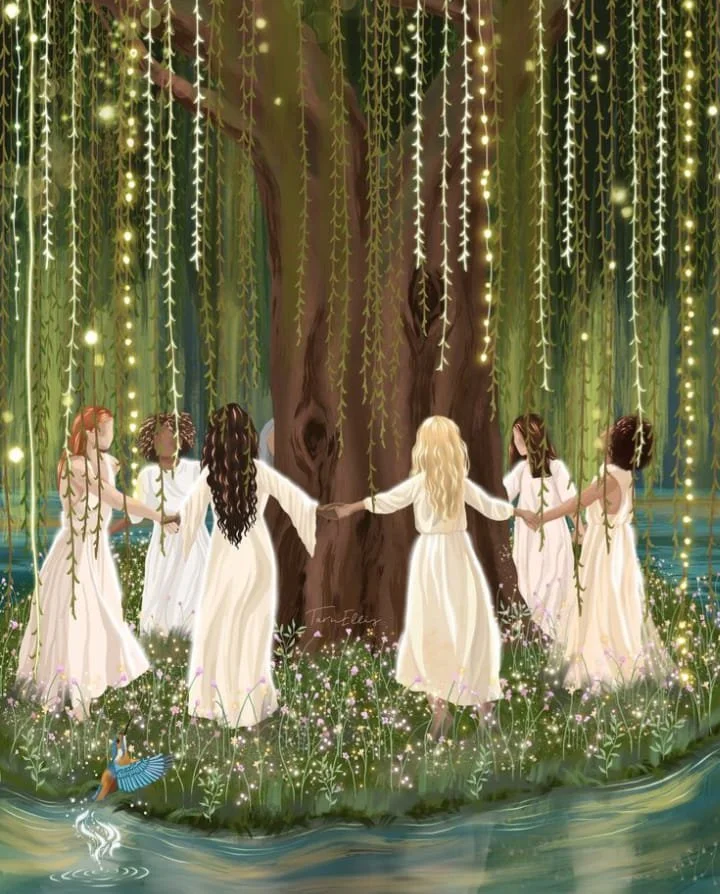
Eleven women gathered in a circle.
Some were mothers.
Some had chosen not to become mothers.
Some were single.
Some were partnered.
Some had lost their mothers in childhood or in adulthood.
Others had mothers who were physically present but emotionally unavailable.
Some carried stories of neglect, criticism, abandonment, betrayal, enmeshment, addiction, or loss.
Each woman arrived carrying her own story, yet beneath the details of those stories was a familiar ache.
A longing to be seen.
A longing to feel safe.
A longing to know that their needs mattered.
Naming the Heartache
McDaniel (2008) describes mother hunger as the absence of three essential experiences:
Nurturance
Protection
Guidance
When these needs go unmet, the wound is often invisible. There are no casts, stitches, or scars others can easily recognize. Yet many women describe carrying an ache they cannot fully explain.
Throughout the group, we often returned to the image of a burn.
Not a scrape.
Not a bruise.
A third-degree burn.
A wound so deep that it changes the tissue beneath the surface.
Many women spend years adapting to this injury. They become highly capable, independent, successful, nurturing toward others, and deeply resilient. Yet underneath, there is often a quiet longing for something that should have been there from the beginning.
The work of healing is not pretending the wound never happened.
It is learning how to tend it with compassion.
Creating a Circle
One of the most powerful aspects of group therapy is that healing does not occur in isolation.
It happens in relationship.
Over six weeks, we created a circle where women could bring forward parts of themselves that had often remained hidden. The parts carrying grief. The parts carrying anger. The parts carrying confusion, shame, loneliness, and longing.
The group was built around safety, choice, and pacing.
No one was required to share more than they wanted.
No one was pushed into vulnerability.
We focused on "regulation over revelation"—the idea that healing comes not from exposing everything at once, but from staying connected to ourselves while gently telling our stories.
As trust grew, so did the willingness to be seen.
Attachment in Real Time
During the third week, we explored attachment patterns and the ways our earliest relationships continue to shape how we move through the world.
We discussed secure, anxious, avoidant, and fearful attachment styles not as labels, but as adaptations.
Brilliant survival strategies.
What fascinated me most as a clinician was watching the group's wisdom emerge organically.
During one session midway through, I noticed participants gelled and sat with group members who identified with their attachment style.
Without instruction or planning, those who identified with avoidant and fearful patterns naturally gravitated toward one side of the room.
Those who identified with anxious and preoccupied patterns gathered on the other.
No one orchestrated it.
Their bodies knew.
Their nervous systems knew.
The room became a living map of attachment.
As the discussion unfolded, something remarkable happened.
Women began to understand one another beyond judgment.
The anxious styles could begin to appreciate how distance might be a form of protection rather than rejection.
The avoidant styles could begin to appreciate how reaching for connection might be rooted in fear of abandonment rather than neediness.
For a moment, they tried on each other's experience.
They stepped into another worldview.
They discovered compassion.
By the third week, the group had become so connected that Deb and my roles shifted significantly.
The women no longer needed us to direct the conversation.
The circle itself had become the teacher.
Betrayal, Grief, and the Stories We Carry
Another theme that emerged repeatedly was grief.
Not only grief for what happened.
But grief for what never happened.
The apology that never came.
The protection that never arrived.
The guidance that was missing.
The nurturance that was never offered freely.
Many women realized they had spent years waiting for someone to finally repair what had been broken.
Others discovered they were carrying burdens that never belonged to them in the first place.
Betrayal often lives quietly within these stories.
Sometimes betrayal is obvious.
Other times it appears in subtle ways—when a child's needs are consistently minimized, when she is asked to care for others before herself, or when she learns that survival requires silence.
Naming these experiences in community transformed isolation into belonging.
Again and again, women discovered that their reactions made sense.
Their symptoms made sense.
Their adaptations made sense.
Healing Beyond Words
Some of the deepest moments of the group happened without language.
We incorporated somatic and experiential practices that invited participants to move beyond thinking and into direct experience.
One of the most meaningful was an infinity-circle movement practice inspired by Indigenous wisdom traditions and body-centered healing approaches.
Participants were invited to notice what they were ready to release and what they were ready to receive.
The movement was gentle.
Slow.
Nonverbal.
There was no need to explain.
No need to perform.
The body already knew.
From a bird's-eye view, the exercise became a beautiful metaphor for healing itself.
All eleven women were moving in the same direction, yet each traveled at her own pace.
Some walked closely together, naturally seeking connection and companionship.
Others moved with more space between themselves and the group, honoring their own rhythm and need for distance.
Some stayed near the center of the infinity circle, while others moved along the outer edges.
There was no right way.
Only the wisdom of each person's nervous system guiding her movement.
The infinity symbol itself represented two interconnected pathways: letting go and receiving.
Some women moved naturally between both sides of the figure eight.
Others continued circling the path of release, grief, and surrender, returning again and again to what they were not yet ready to put down.
Only when their bodies felt ready did they cross into the accompanying circle of receiving.
Receiving support.
Receiving compassion.
Receiving guidance.
Receiving the possibility of something new.
The midpoint of the infinity circle became a living metaphor for transformation. It was the place where opposites met—holding and
releasing, grief and hope, the known self and the emerging self. It represented the tension that accompanies all growth. The
stretching beyond old patterns while still feeling their pull. The question many women carried into the circle was not simply, What
am I letting go of? but What am I making room for? Standing in that center point required trust. Trust that something new could
emerge before it was visible. Trust that the soul knows how to move toward wholeness. In many ways, the center of the infinity
circle became a symbol of healing itself—the sacred threshold between who we have been and who we are becoming.
As I watched from the outside, I was struck by how accurately the movement reflected each woman's healing journey.
No one could be rushed.
No one could be pushed into receiving before they were ready.
And yet every woman remained part of the same circle.
Each honoring her own timing while witnessing the journeys of others.
The exercise reminded us that healing is rarely linear. We revisit losses, release burdens in layers, and often return to the same places more
than once. Yet even when our paths look different, we are still moving.
Together.
The circle became a place where women could connect not with the version of themselves they show the world, but with the deeper self underneath—the one carrying both wounds and wisdom.
The one who had been waiting to be witnessed.
And perhaps most importantly, the one who discovered she was not alone.
Healing Beyond the Ordinary
One of the most meaningful moments of the group began with a simple invitation: each woman was asked to bring an object, symbol, or story representing her source of healing, wisdom, guidance, or connection beyond the ordinary world.
What unfolded continues to move me.
Women arrived carrying sacred objects, books, jewelry, photographs, tattoos, and symbols representing deeply personal sources of strength and meaning. Around the circle were Christian, Catholic, Buddhist, and Wiccan traditions. Some women spoke of ancestors whose presence they still felt guiding their lives. Others shared how nature, meditation, dreams, intuition, creativity, or moments of synchronicity had sustained them through difficult seasons.
What struck me most was not the diversity of beliefs, but the quality of attention within the room.
There was curiosity.
Respect.
Listening.
Wonder.
For a moment, eleven women with different histories, different wounds, and different worldviews sat together and shared what helped them make meaning of suffering and what helped them continue moving toward healing.
As a clinician, it felt like witnessing something increasingly rare in our culture—a community capable of honoring differences without judgment.
The sources each woman brought reflected something essential: healing rarely happens through insight alone. It often requires connection to something larger than the individual self—a faith tradition, nature, creativity, ancestry, spirituality, community, or a sense of purpose that helps us navigate life's deepest wounds.
In a group focused on mother hunger, this exercise became a reminder that guidance can emerge from many places. Sometimes the nurturance, protection, and wisdom we longed for are discovered through unexpected sources that help us find our way back to ourselves.
What I Learned
As a clinician, I offered the group hoping to create a healing experience for my clients.
What I witnessed instead was women creating one together.
Again and again, I saw courage.
Not the loud kind.
The quiet kind.
The courage required to speak the truth.
The courage required to grieve.
The courage required to stop minimizing pain.
The courage required to believe that healing is possible.
I witnessed women who began to identify their unmet needs with greater clarity.
I witnessed them recognizing old attachment patterns without shame.
I witnessed them soften toward themselves.
And I witnessed them discover that healing does not always come from the person who wounded us.
Sometimes healing comes from community.
Sometimes it comes from friendship.
Sometimes it comes from nature.
Sometimes it comes through therapy, spirituality, creativity, movement, or grief.
Often it comes through learning how to become a trustworthy companion to ourselves.
The women who entered our circle did not leave "fixed."
That was never the goal.
They left with something far more valuable:
A deeper understanding of themselves.
A greater capacity to honor their needs.
A stronger connection to their bodies.
And the lived experience of being witnessed by other women who understood.
Mother hunger may leave a profound ache.
But healing reminds us of something equally profound:
We are capable of finding nurturance, protection, and guidance in new places.
We are capable of building secure relationships.
We are capable of grieving what was lost while still embracing what is possible.
And perhaps most importantly, we are capable of becoming the safe place we have been searching for all along.
In gratitude to the eleven women who shared their stories, their courage, and their humanity. It was an honor to walk beside you.